
Your Rights If Police Want to Search Your Car Without a Warrant
Know your rights if police want to search your car without a warrant. Call (833)-248-4565 to connect with a defense attorney and protect your options.

By Aaron Owens
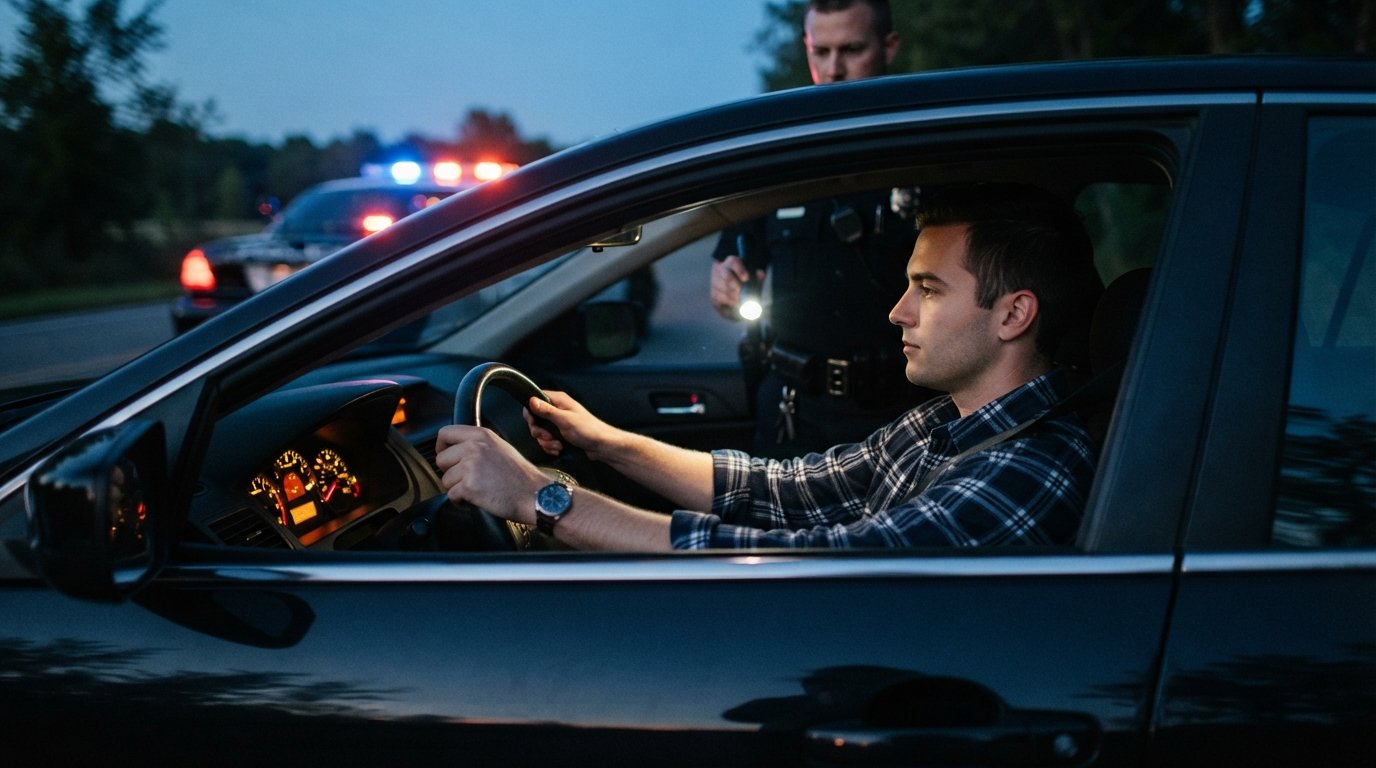
You are driving home after a long shift when flashing lights appear in your rearview mirror. The officer asks for your license and registration, then poses a question that makes your stomach tighten: "Do you mind if I take a look inside your vehicle?" In that moment, your answer matters more than most drivers realize. Understanding your rights if police want to search your car without a warrant is not about being uncooperative or hiding something. It is about knowing the legal boundaries that protect every person on the road, and knowing how to respond in a way that preserves your options later.
The Fourth Amendment to the U.S. Constitution generally protects you against unreasonable searches and seizures. A vehicle search is a search, and in most situations, police need either a warrant or a recognized exception to the warrant requirement before they can look through your car. The complication is that several exceptions apply to vehicles more broadly than they apply to homes, and officers sometimes rely on those exceptions in ways that drivers do not fully understand. This guide walks through how the law works, what consent really means, which scenarios give police more leeway, and why consulting a criminal defense attorney early can make a meaningful difference in how a case unfolds.
How the Fourth Amendment Applies to Vehicle Searches
The Fourth Amendment protects people from unreasonable searches and seizures by government officials, including police officers. Courts have long recognized that a car is private property and that searching it intrudes on a person's reasonable expectation of privacy. At the same time, courts have carved out rules specific to vehicles because cars are mobile, heavily regulated, and often used in connection with public roads. Those rules do not eliminate your rights, but they shape how and when an officer can act without first obtaining a warrant from a judge.
The baseline principle is straightforward: if an officer wants to search your car and no exception applies, the officer must obtain a warrant. A warrant requires probable cause and approval from a neutral judge or magistrate. Probable cause is more than a hunch or a suspicion. It means specific facts that would lead a reasonable person to believe evidence of a crime or contraband is in the vehicle. An officer who smells marijuana, sees a weapon in plain view, or observes behavior consistent with a specific crime may be able to establish probable cause. A nervous demeanor or a prior record, standing alone, typically does not.
When a warrantless search does occur, courts often examine whether the officer's actions fit within an established exception. The most common exceptions in the vehicle context include consent, search incident to arrest, the automobile exception, inventory searches, and plain view. Each exception has its own requirements, and each has limits that drivers and their attorneys can examine after the fact. Because these exceptions are fact-specific, the details of the stop, the questions the officer asked, and the way you responded all become part of the legal record.
What Consent Means and How You Can Limit It
Consent is the most common basis for a warrantless vehicle search, and it is also the one over which you have the most direct control. When an officer asks, "Can I search your car?" the answer is a request, not a command. You are generally free to decline. Consent must be voluntary, meaning it cannot be the product of coercion, threats, or an officer's claim of authority that does not actually exist. If you say yes, you have given the officer permission to search, and courts will usually treat that permission as valid unless there is evidence it was obtained improperly.
Consent can be limited. You are not required to give an unlimited, open-ended yes. If you choose to consent, you can define the scope in clear terms. For example, you might allow a search of the passenger compartment but not the trunk, or allow a search of a specific bag but not the entire vehicle. Officers are generally expected to honor the boundaries you set, and a search that goes beyond the scope of your consent can be challenged later. You can also withdraw consent at any point during the search, although the practical reality is that once an officer has begun searching, the situation can become complicated.
How you decline matters. You do not need to argue, raise your voice, or explain your reasoning. A calm, direct statement works best: "I do not consent to a search." You can ask whether you are free to leave, and you can ask the officer to clarify the legal basis for the stop. If the officer proceeds anyway, do not physically resist. Instead, state your objection clearly and let the interaction play out. The legality of the search can be addressed later with the help of a defense attorney who can review the stop, the questions asked, and the officer's stated justification.
If you are unsure how to handle a specific stop or want to understand what a charge could mean for you, resources such as a guide on the DUI defense process and your rights after a charge can help you see how these issues connect to the broader criminal process. For drivers who want to speak with a defense lawyer about a search that already happened, the Attorney Directory lets you find local attorneys and request a quote with no obligation to hire.
Common Scenarios: Arrest, Inventory, and the Automobile Exception
Beyond consent, several scenarios give officers more room to search a vehicle without a warrant. Understanding these situations helps you recognize when an officer may have a legitimate basis and when a search may be open to challenge. The most frequently litigated scenarios involve searches incident to arrest, inventory searches, the automobile exception, and plain view.
A search incident to arrest generally allows an officer to search the area within the arrestee's immediate control, largely for officer safety and to prevent destruction of evidence. In the vehicle context, courts have narrowed this exception over time. If you are arrested and placed in a patrol car, the passenger compartment may not be treated the same way it once was, and the scope depends heavily on the facts. An officer cannot automatically search the entire car simply because an arrest occurred.
Inventory searches happen when police take custody of a vehicle, for example after a tow. Officers may follow a standardized procedure to catalog the contents of the car for safekeeping and to protect against claims of lost property. The key word is standardized: an inventory search must follow routine department policy rather than serve as a pretext to look for evidence. If the inventory appears to have been conducted in an unusual or targeted way, that is a fact worth examining.
The automobile exception allows police to search a vehicle without a warrant when they have probable cause to believe the vehicle contains contraband or evidence of a crime. Because vehicles can be moved quickly, courts have reasoned that obtaining a warrant is not always practical. This exception is powerful, but it still requires probable cause. An officer cannot rely on a vague suspicion or a generic statement that the car "smelled like something." The specific facts matter, and a defense attorney can challenge whether probable cause actually existed.
Plain view is another frequently cited basis. If an officer is lawfully in a position to see contraband or evidence in plain view, the officer may seize it. This exception does not authorize a broader search; it applies to what is already visible. Officers sometimes use plain view as a starting point and then expand the search based on what they find. Whether that expansion was lawful depends on the sequence of events and the justification offered at each step.
How to Respond During a Traffic Stop
The way you respond during a traffic stop can shape what happens next, both on the roadside and in court. You do not need to be a legal expert to protect your rights, but a few practical steps can help you stay calm and avoid unnecessary escalation. The goal is to be polite, clear, and consistent while preserving your ability to challenge any search later.
Start by providing the documents the officer requests, such as your license, registration, and proof of insurance. Keep your hands visible and avoid sudden movements. You can ask why you were stopped and whether you are free to leave. If the officer asks to search your vehicle, you can decline in a calm and direct way. You do not have to explain your reasons, and you do not have to consent simply because the request is phrased politely.
If the officer asks questions about where you are going or what you have been doing, you can answer briefly or state that you prefer not to answer. You should not lie or provide false information, as that can create additional problems. If the officer says a search will happen regardless of your answer, do not physically resist. State clearly that you do not consent, and let the officer proceed. Your statement will be part of the record, and an attorney can evaluate whether the search exceeded legal limits.
After the stop, write down what you remember as soon as you can. Note the officer's name and badge number if visible, the time and location, the questions asked, and the exact words used when you declined consent. These details can be valuable if a case develops. If you are charged with an offense, contact a criminal defense attorney early. An attorney can review the stop, request body camera or dash camera footage, and assess whether the search complied with the Fourth Amendment.
Here are a few practical steps to keep in mind during a search request:
- Stay calm and keep your hands visible; politeness is not the same as consent.
- Decline clearly if you do not want to consent: "I do not consent to a search."
- Ask whether you are free to leave, and ask for the legal basis if the officer proceeds.
- Do not physically resist, even if you believe the search is unlawful.
- Document the details afterward, including the officer's statements and the scope of the search.
These steps are not a guarantee of any particular outcome, and they are not legal advice. They are practical habits that help preserve the factual record. The stronger the record, the easier it is for an attorney to evaluate whether an officer stayed within the law or crossed a line that can be challenged in court.
Why Speaking With a Criminal Defense Attorney Early Matters
Vehicle searches often become central issues in criminal cases. If evidence was found during a search, the defense may argue that the search violated the Fourth Amendment and that the evidence should be suppressed. Suppression can change the trajectory of a case, sometimes eliminating the prosecution's strongest evidence. But these arguments depend on facts, and facts fade quickly. Memories blur, video gets overwritten, and witnesses become harder to locate. Speaking with a defense attorney early helps preserve the details that matter.
An attorney can review the sequence of events, identify which exception the officer relied on, and assess whether that exception actually applies. Consent cases turn on whether the consent was voluntary and whether the search stayed within the scope you allowed. Probable cause cases turn on the specific facts the officer can articulate. Inventory cases turn on whether department policy was followed. Each of these issues requires a careful look at the record, and an attorney knows what to request and what questions to ask.
Early consultation also helps you understand your options before you make statements that could complicate your defense. You do not have to navigate the process alone, and you do not have to wait until charges are filed to get information. If you are looking for a defense lawyer in your area, you can use a directory to find attorneys who handle vehicle searches and related criminal matters, then request a quote and decide whether to move forward. There is no obligation to hire, and the initial conversation can help you understand what to expect.
Your rights if police want to search your car without a warrant are not a technicality. They are part of the constitutional framework that governs how officers interact with the public. Knowing how the Fourth Amendment applies, what consent means, which scenarios give police more leeway, and how to respond during a stop puts you in a better position to protect yourself. If a search has already happened, a timely conversation with a criminal defense attorney can help you understand the legal issues and the path ahead.