
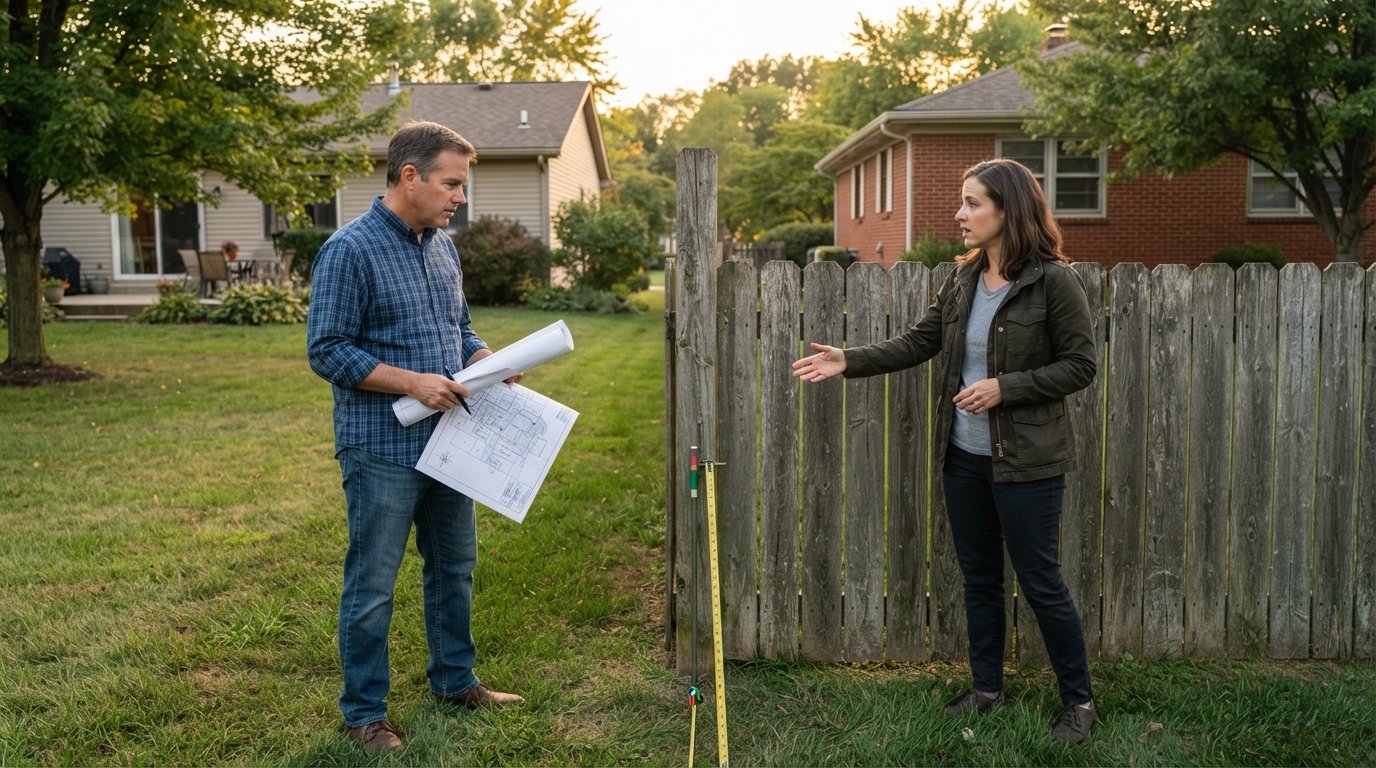
Resolving Property Line Disputes With Neighbors: A Guide
Resolving property line disputes with neighbors starts with a survey and calm talk. Learn when to bring in a lawyer and how to protect your rights.

By Camila Reyes
Few things strain a neighborhood relationship quite like a boundary disagreement. What starts as a casual question about where a fence should sit can escalate into tense conversations, angry letters, and even legal action. If you are reading this, chances are you are dealing with a property line issue right now, or you want to be prepared before one arises. Resolving property line disputes with neighbors does not have to mean years of hostility. With the right approach, you can protect your property rights, preserve (or at least peacefully end) the relationship, and avoid the kind of legal fees that can easily climb into the tens of thousands of dollars.
This guide walks you through the practical and legal steps involved in boundary disputes. It covers how to identify the true property line, how to communicate effectively, when to bring in a surveyor or mediator, and when it makes sense to consult a real estate attorney. It also explains how to use a lawyer directory to find local counsel if the situation escalates. The goal is not to give legal advice but to help you understand the landscape so you can make informed decisions and know when to ask for professional help.
Start With the Paper Trail: What Your Deed and Plat Map Actually Say
Before you assume anything about where the line sits, gather the documents. Your deed, your title insurance policy, and the subdivision plat map (if you live in a platted neighborhood) are the starting points. These records describe your lot in metes and bounds, by lot number, or by reference to a recorded survey. They are not always perfectly clear, especially in older neighborhoods where descriptions may refer to a tree that no longer exists or a stone that has been moved. Still, they are the legal foundation.
Pull your deed from the county recorder or assessor website. Many counties now offer free online access. If you have a mortgage, your lender or title company may also have copies. Compare your documents with your neighbor's if they are willing to share. Sometimes the conflict comes from a simple misunderstanding: one person is relying on an old fence line, while the other is reading the deed literally. Getting the paperwork straight early can prevent a lot of wasted argument.
Also check for any easements or encroachments that might affect the boundary. An easement gives someone the right to use part of your land for a specific purpose, such as utility lines or drainage. An encroachment is a physical intrusion, like a fence, driveway, or shed that sits partly on your neighbor's property. These issues often overlap with boundary disputes and can complicate resolution. If you find an easement or encroachment in your title documents, flag it for discussion with a lawyer later.
Get a Professional Survey: The Only Way to Know for Sure
Deeds and plats are essential, but they do not always tell you exactly where the line falls on the ground. A licensed land surveyor can locate the property corners, measure the distances and angles, and set or reset monuments. A survey is the most reliable evidence you can have in a boundary dispute. It is also often the first thing a court will look at if the case goes to litigation.
Surveys are not cheap. Depending on your location and the size of the lot, you might pay anywhere from a few hundred to several thousand dollars. However, that cost is minor compared to the expense of a lawsuit or the loss of usable land. If your neighbor disputes the survey, you can ask the surveyor to explain their findings or, in rare cases, hire a second surveyor for a peer review. Most disputes settle once a neutral professional has staked the line.
Before you hire a surveyor, check whether your state or county has specific requirements for boundary surveys. Some states require surveyors to file a plat or record of the survey with the county. Others have minimum standards for monumentation. A local surveyor will know these rules. When you get the survey, share a copy with your neighbor and offer to walk the line together. Sometimes seeing the stakes in the ground resolves the issue immediately.
Communicate Before You Escalate: Practical Steps for a Productive Conversation
Once you have your documents and a survey, you are in a much stronger position to talk. But how you talk matters. Approaching your neighbor with a demand or a threat almost always backfires. Instead, aim for a calm, fact-based conversation. Choose a neutral time and place, not when either of you is rushed or angry. Start by acknowledging that boundary lines can be confusing and that you want to find a solution that works for both of you.
Bring your survey and deed, but do not wave them in your neighbor's face. Explain what you understand the line to be and ask what they understand. Listen carefully. They may have their own documents or a different survey. If they do, offer to compare notes. The goal is not to win an argument but to agree on a boundary that both of you can live with. If the conversation becomes heated, suggest taking a break and resuming later, or bringing in a neutral third party.
It also helps to put your understanding in writing, even if you continue talking. A friendly letter or email summarizing what you discussed and what you propose can prevent misunderstandings later. If you reach an agreement, you may want to formalize it with a boundary line agreement. That is a legal document, so you should have a lawyer draft or review it. But the conversation itself is the first step.
Here are a few practical tips for that initial conversation:
- Choose a neutral setting, such as a front porch or a coffee shop, rather than shouting over the fence.
- Lead with curiosity, not accusations. Ask questions like "Can you help me understand how you see the line?"
- Bring copies of your documents and offer to share them.
- Focus on the future: what can you both agree on to avoid future problems?
- If emotions run high, suggest pausing and involving a mediator or attorney.
Even if the conversation does not resolve everything, it sets a tone of respect. That tone can make mediation or negotiation much easier if you need it later. And if your neighbor refuses to talk, you have a record that you tried to resolve things amicably, which can matter if the dispute goes to court.
When Talking Fails: Mediation, Arbitration, and Legal Options
Not every neighbor will be reasonable. If your attempts to communicate stall, you have several options short of a lawsuit. Mediation is often the next step. A mediator is a neutral third party who helps you and your neighbor reach a voluntary agreement. Mediation is typically faster, cheaper, and less adversarial than litigation. Many courts require mediation before a boundary dispute trial, so trying it early can save time.
Arbitration is another option, though it is less common for boundary disputes. In arbitration, a neutral arbitrator hears both sides and makes a binding decision. You can agree to arbitration in a contract or after the dispute arises. It is usually private and can be quicker than court, but the arbitrator's decision is often final and hard to appeal. Mediation keeps decision-making power in your hands; arbitration takes it away.
If mediation fails, you may need to file a lawsuit. Boundary disputes are typically civil matters, often heard in state court. The specific legal theories can include trespass, ejectment, quiet title, or adverse possession. Adverse possession is a doctrine that allows someone who openly, continuously, and exclusively uses another person's land for a certain number of years to claim ownership. The requirements vary by state, but the concept is a common source of boundary disputes. A lawyer can tell you whether adverse possession might apply to your situation.
Litigation is expensive and stressful. It can also poison neighborhood relations for years. Before you file, consider whether the stakes justify the cost. If the disputed strip is a few inches of lawn, a settlement or a boundary line agreement is almost always better. If the dispute involves a structure, a driveway, or valuable timber, the calculus may change. A real estate attorney can help you weigh the options.
Finding the Right Real Estate Lawyer for Your Boundary Dispute
If your dispute involves significant money, title issues, or an uncooperative neighbor, you should consult a real estate attorney. A lawyer can review your deed and survey, advise you on state-specific laws (including adverse possession and boundary line agreements), negotiate on your behalf, and represent you in mediation or court. Many real estate lawyers offer an initial consultation for a modest fee or sometimes for free.
How do you find a good lawyer? Start with your state or local bar association's lawyer referral service. You can also ask friends, family, or your real estate agent for recommendations. Another option is to use an online directory like AttorneyDirectory.Lawyer, which lets you search for lawyers in your city and request a quote. The site is a U.S. lawyer directory and advertising platform, not a law firm or a lawyer referral service. Participating attorneys may contact you, and there is no obligation to hire. It is a simple way to get initial information and compare options.
When you contact a lawyer, be prepared to explain the situation clearly and provide copies of your deed, survey, and any correspondence with your neighbor. Ask about their experience with boundary disputes and their fee structure. Some lawyers charge by the hour; others may offer flat fees for certain tasks, like drafting a boundary line agreement. Do not be afraid to interview more than one lawyer before you decide.
Keep in mind that the best outcome is often a negotiated settlement. A lawyer can help you achieve that by sending a demand letter, negotiating with your neighbor's attorney, or representing you in mediation. Only a small percentage of boundary disputes go to trial. With good legal advice, you can usually resolve the matter without a courtroom.
Preventing Future Disputes: Practical Steps After Resolution
Once you have resolved the dispute, take steps to prevent it from happening again. If you and your neighbor agreed on a new boundary line, consider recording a boundary line agreement with the county. This document becomes part of the public record and binds future owners. If you installed a new fence or moved an existing one, make sure it matches the agreed line. Take photos and keep copies of all documents, surveys, and agreements in a safe place.
It also helps to maintain open communication with your neighbor. A brief conversation when you plan to do landscaping or build a structure near the line can head off problems. If you are buying or selling property, disclose any known boundary issues. In some states, sellers must disclose boundary disputes or encroachments. Failing to do so can lead to lawsuits later.
Finally, consider a title check or a new survey when you buy a property. Many boundary disputes arise because buyers rely on old fences or inaccurate information. A fresh survey at the time of purchase is a small investment that can save you from a major headache. If you are already in a dispute, a survey is often the key piece of evidence that leads to resolution.
Resolving property line disputes with neighbors is rarely fun, but it is manageable. Start with documents and a survey, communicate calmly, and bring in professionals when needed. Whether you settle over a cup of coffee or in mediation, the goal is to protect your rights and preserve your peace of mind. If you need legal help, a directory like AttorneyDirectory.Lawyer can connect you with local attorneys who handle real estate matters. With the right approach, you can put the dispute behind you and enjoy your property again.