
Probable Cause Versus Reasonable Suspicion in Criminal Cases
Probable cause versus reasonable suspicion in criminal cases explained. Call (833)-248-4565 to find a local defense attorney and request a quote.

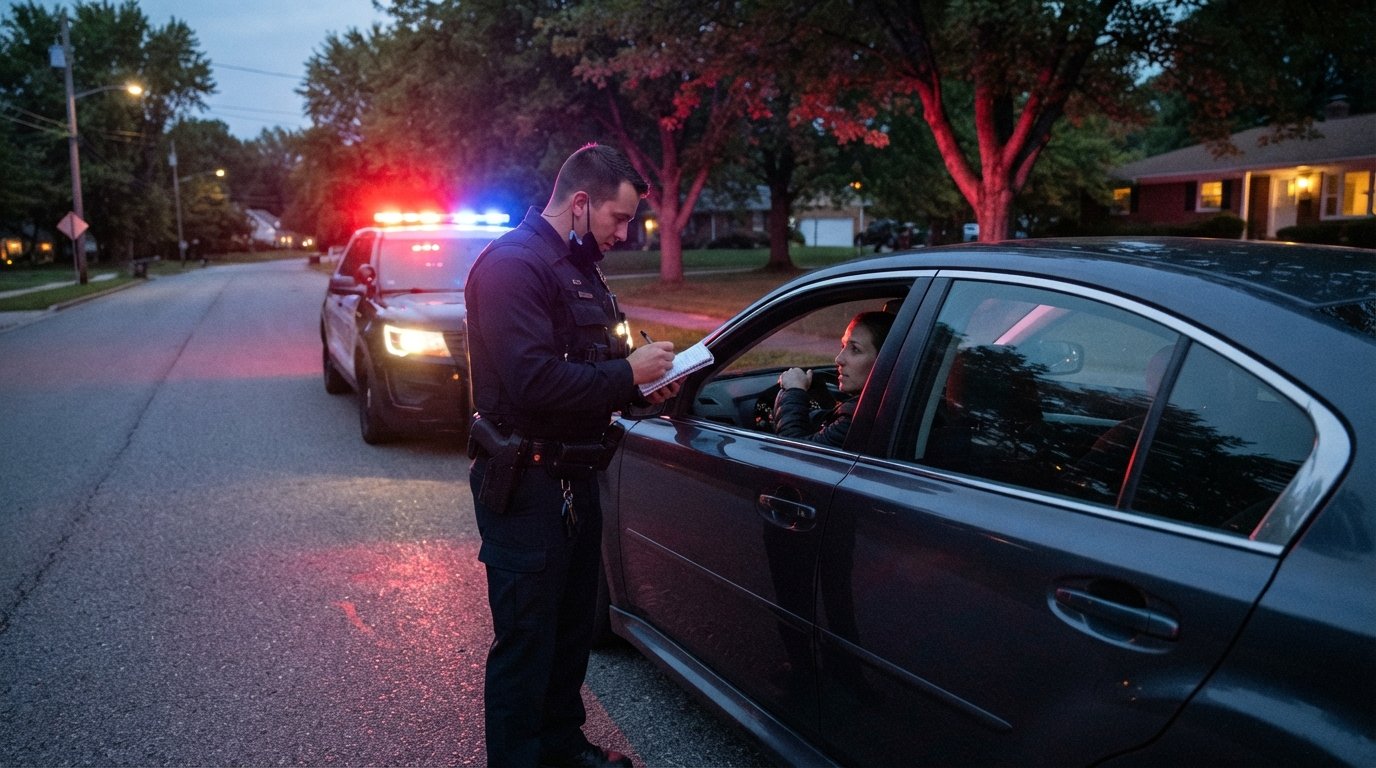
You are walking home when a police officer orders you to stop. Or perhaps you are driving and see flashing lights in your rearview mirror. In that moment, the difference between a casual encounter and a full-blown arrest hinges on two legal standards: reasonable suspicion and probable cause. These terms appear in police reports, court filings, and television dramas, but their real-world impact is profound. They determine whether an officer can stop you, frisk you, search your vehicle, or take you into custody. Understanding how probable cause versus reasonable suspicion in criminal cases works is not just an academic exercise; it is essential knowledge for anyone who wants to protect their constitutional rights. This article breaks down both standards, explains how they apply at each stage of a police encounter, and shows why the distinction often becomes the central battleground in a criminal defense case.
What Is Reasonable Suspicion?
Reasonable suspicion is a lower legal threshold than probable cause. It arises when a police officer has specific, articulable facts that would lead a reasonable person to believe that criminal activity may be afoot. The key word is "articulable": the officer must be able to point to concrete observations, not just a hunch or a gut feeling. In the landmark case Terry v. Ohio (1968), the U.S. Supreme Court held that police may briefly detain a person for investigative purposes when reasonable suspicion exists. This is commonly known as a Terry stop.
For example, imagine an officer sees a person at 2 a.m. peering into car windows in a parking lot and trying door handles. Those specific actions, combined with the time of night and the location, could create reasonable suspicion that the person is attempting to break into vehicles. The officer may approach and ask questions. However, reasonable suspicion alone does not authorize a full arrest or a broad search. It permits a limited pat-down of outer clothing if the officer also reasonably believes the person may be armed and dangerous.
Reasonable suspicion often arises in traffic stops as well. A broken taillight, a failure to signal, or a vehicle matching a description from a recent crime can all supply the necessary justification. The standard is flexible and fact-specific, which means courts evaluate each situation on its own merits. Because it is a low bar, reasonable suspicion is easy for officers to meet in many routine encounters, but it is not a blank check for unlimited police action.
What Is Probable Cause?
Probable cause is a higher standard. It exists when the facts and circumstances known to the officer would lead a reasonable person to believe that a crime has been committed, is being committed, or that evidence of a crime will be found in a particular place. Probable cause is required for an arrest and for most searches, including searches of homes and vehicles (with some exceptions). It is also the standard for obtaining a warrant from a judge.
Consider a scenario where an officer responds to a report of a burglary in progress. A witness provides a description of the suspect and the direction of flight. The officer spots a person matching the description, carrying a bag that appears to contain stolen items, and the person flees upon seeing the officer. These cumulative facts could establish probable cause to arrest. Unlike reasonable suspicion, which supports a brief investigative detention, probable cause supports a formal arrest and the accompanying search incident to arrest.
The probable cause standard also applies to search warrants. Before a judge signs a warrant to search a home for drugs, the police must present an affidavit detailing why they believe evidence will be found there. The judge independently reviews the affidavit to ensure probable cause exists. This judicial check is a cornerstone of Fourth Amendment protection against unreasonable searches and seizures.
How the Two Standards Apply to Stops, Frisks, and Arrests
The practical difference between these standards becomes clearest when you look at the sequence of a typical police encounter. Each stage requires a different level of justification, and officers cannot skip steps without legal consequences.
During a traffic stop or a brief investigative detention on the street, reasonable suspicion is the minimum requirement. The officer may ask for identification, question you about your activities, and conduct a pat-down if there is reason to believe you are armed. This detention must be temporary; if the officer develops probable cause during the stop, the encounter may escalate to an arrest. If probable cause does not develop, the officer must generally let you go after a reasonable time.
For a frisk (a pat-down of outer clothing for weapons), the officer needs reasonable suspicion that you are armed and dangerous. The frisk is limited to a search for weapons, not evidence. If the officer feels an object that is immediately recognizable as contraband (for example, a bag of drugs), it may be seized under the plain feel doctrine. However, the frisk cannot be used as a pretext to search for evidence without probable cause.
An arrest requires probable cause. At the moment of arrest, the officer must have enough facts to convince a reasonable person that a crime has been committed and that you are the perpetrator. Once arrested, you are entitled to a probable cause hearing (often called a preliminary hearing or arraignment) where a judge reviews the evidence. If the judge finds no probable cause, you must be released, and any evidence obtained from the arrest may be suppressed.
Here is a quick summary of the key differences:
- Reasonable suspicion is a low bar based on specific, articulable facts suggesting criminal activity may be occurring. It justifies a brief investigative stop and, if additional facts support it, a limited pat-down for weapons.
- Probable cause is a higher bar based on facts that would lead a reasonable person to believe a crime has been committed or that evidence will be found. It justifies a full arrest, most searches, and the issuance of a warrant.
- Burden of proof shifts at each stage: the officer must articulate facts for reasonable suspicion, and the prosecution must later show probable cause at a hearing.
These distinctions matter because they define the legal boundaries of police conduct. An officer who acts without the required justification risks having evidence excluded from court. That is why defense attorneys scrutinize the early stages of an encounter so carefully.
Why the Distinction Matters in Suppression Motions
Suppression motions are the primary vehicle for challenging police conduct that violates the Fourth Amendment. When evidence is obtained through an illegal stop, search, or arrest, the defense can ask the court to exclude that evidence from trial. The distinction between reasonable suspicion and probable cause is often the deciding factor in these motions.
Suppose an officer stops a car based only on a hunch that the driver is involved in drug activity. No traffic violation occurred, and the officer cannot point to specific facts suggesting a crime. That stop would violate the reasonable suspicion standard, and any evidence found during the stop (such as drugs in plain view) could be suppressed. Similarly, if an officer has reasonable suspicion to stop you but then conducts a full search of your car without probable cause or a valid exception, the evidence from that search may be excluded.
Courts apply an objective standard when evaluating these claims: would a reasonable officer, in the same circumstances, have believed the standard was met? The subjective intent of the officer is generally irrelevant. This means that even if an officer had a bad motive, the stop or search may still be valid if the objective facts supported it. Conversely, an officer's good intentions cannot save an illegal search.
For anyone facing charges, understanding these standards is essential for evaluating whether a defense attorney has grounds to file a suppression motion. If you are searching for a criminal defense lawyer, you can use AttorneyDirectory.Lawyer to find local attorneys who handle suppression issues and can assess the strength of your case. The directory allows you to request a quote with no obligation to hire, making it a practical starting point for your search.
How a Defense Attorney Challenges a Stop or Search
A skilled defense attorney will dissect the police encounter step by step, looking for gaps in the justification. The goal is to identify the earliest point at which the officer acted without the required legal standard, because a constitutional violation at any stage can taint subsequent evidence.
The first step is to obtain all available evidence: police reports, body camera footage, dash camera footage, witness statements, and dispatch records. The attorney will compare the officer's stated reasons with the objective facts. Did the officer actually see a traffic violation, or was that a pretext? Was the description of the suspect specific enough to establish reasonable suspicion, or was it too generic? These details matter.
Next, the attorney will determine whether the stop was unlawfully prolonged. Even if the initial stop was valid, the officer cannot extend it beyond the time reasonably necessary to address the original purpose. If the officer keeps you at the scene for twenty minutes to run a drug dog around your car without reasonable suspicion of drug activity, that extension may violate the Fourth Amendment. The attorney can argue that any evidence found after the unlawful extension should be suppressed.
For searches, the attorney will examine whether the officer had a warrant, probable cause, or a valid exception (such as consent, plain view, or search incident to arrest). Consent must be voluntary, not coerced. Plain view requires that the officer was lawfully present and that the incriminating nature of the item was immediately apparent. Each exception has specific requirements, and the burden is on the prosecution to prove they apply.
If you are considering a defense strategy, it helps to understand the broader criminal process. For example, if charges are dismissed or you are acquitted, you may later want to seal or expunge your record. Our guide on how to expunge or seal a criminal record in your state explains the eligibility rules and the steps involved. But first, the immediate priority is challenging the evidence against you, and that starts with the probable cause versus reasonable suspicion analysis.
Common Scenarios Where the Standards Diverge
To see how these standards play out in real life, consider a few common scenarios. Each illustrates how a small change in facts can shift the legal analysis.
Scenario 1: The late-night walk. An officer sees a person walking quickly through a high-crime neighborhood at 3 a.m. The person looks over their shoulder and avoids eye contact. Is that reasonable suspicion? Courts have generally held that nervous behavior and presence in a high-crime area, without more, are not enough to justify a stop. However, if the person matches a specific description of a suspect in a recent robbery and is seen carrying a crowbar, reasonable suspicion likely exists. If the officer then finds a gun during a pat-down, the question becomes whether the frisk was justified by reasonable suspicion that the person was armed.
Scenario 2: The traffic stop. An officer pulls over a car for a broken license plate light. During the stop, the officer notices a strong odor of marijuana and sees a small baggie on the passenger seat. At that point, probable cause exists to search the vehicle for drugs. The initial stop was justified by reasonable suspicion of a traffic violation, and the subsequent observations created probable cause for a broader search. If, however, the officer had no valid reason for the stop and simply followed the car hoping to find something, the evidence would likely be suppressed.
Scenario 3: The frisk. An officer stops a person for jaywalking. The person is cooperative and calm. The officer decides to conduct a pat-down anyway and finds a concealed knife. Was the frisk lawful? Without specific facts suggesting the person was armed and dangerous, the frisk likely violated the Fourth Amendment. The knife could be suppressed, and any charges related to it might be dismissed.
These examples show that the line between reasonable suspicion and probable cause is not always obvious. Courts must weigh the totality of the circumstances, and the outcome often depends on the quality of the officer's observations and the attorney's ability to highlight inconsistencies.
What to Do If You Are Stopped or Arrested
If you find yourself in a police encounter, knowing your rights can make a significant difference. You do not have to answer every question, but you should remain calm and respectful. You can ask the officer, "Am I free to go?" If the answer is yes, you may leave. If the answer is no, you are being detained, and the officer needs reasonable suspicion to justify the detention.
If you are arrested, you have the right to remain silent and the right to an attorney. Do not resist arrest, even if you believe it is unlawful. The proper place to challenge the arrest is in court, not on the street. Once you have an attorney, they can investigate whether the officer had probable cause and file a suppression motion if warranted.
Finding the right attorney early is critical. You can search for criminal defense lawyers in your city through TheLawyerDirectory. The platform is not a law firm or a lawyer referral service, but it connects you with participating attorneys who may contact you. There is no obligation to hire, and the initial consultation can help you understand your options. To start the process, you can request a quote and describe your situation. The directory covers a wide range of practice areas, including criminal defense, so you can find someone who focuses on the issues raised in your case.
Remember that the probable cause versus reasonable suspicion distinction is not just a technicality. It is a constitutional safeguard designed to prevent arbitrary police power. When that safeguard is violated, the courts can exclude evidence, which may lead to dismissed charges or a more favorable plea agreement. An experienced defense attorney knows how to use these standards to protect your rights and build a strong defense.
The legal standards of reasonable suspicion and probable cause are the gatekeepers of the criminal justice system. They define when an officer can intrude on your liberty and when the state can use evidence against you. By understanding how these standards apply, you can better evaluate your own situation and have more productive conversations with legal counsel. If you are facing charges or an investigation, do not wait to seek legal advice. The earlier you involve an attorney, the more time they have to challenge the stop, search, or arrest and to pursue the best possible outcome in your case.