
Legal Rights After a Pedestrian Accident Involving a Vehicle
Understand your legal rights after a pedestrian accident involving a vehicle. Call (833)-248-4565 to request a no-obligation attorney quote today.

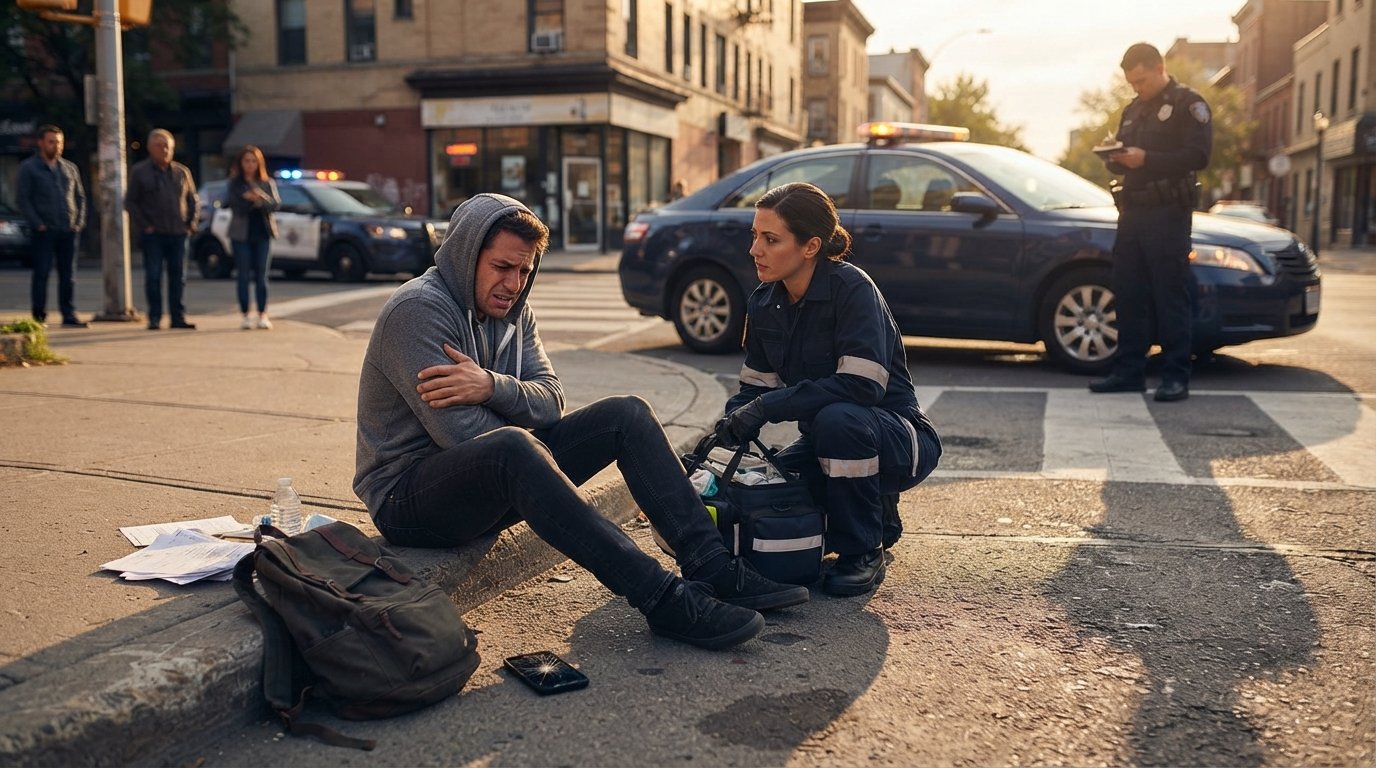
A pedestrian struck by a vehicle faces a chaotic aftermath: blaring sirens, confusing paperwork, mounting medical bills, and pressure from insurance adjusters who may call before the shock has even worn off. In that moment, understanding your legal rights is not an abstract exercise. It is the difference between a claim that covers your recovery and one that leaves you paying for someone else's mistake. This guide explains the rights that arise after a pedestrian accident involving a vehicle, the steps that protect those rights, and how state rules on fault and insurance can reshape what you recover. It is informational only and is not legal advice.
Your Core Legal Rights After a Pedestrian Collision
When a vehicle strikes a pedestrian, the law generally treats the injured person as having the same rights as any other accident victim. The most important right is the ability to seek compensation from the party whose negligence caused the harm. That right is built on a simple principle: drivers owe pedestrians a duty of reasonable care, and when a breach of that duty causes injury, the injured person may pursue a claim. This is the foundation of most personal injury claims, and it applies whether the collision happened in a crosswalk, at an intersection, in a parking lot, or on a residential street.
Within that broad right are several specific protections that pedestrians should understand early. These include the right to have your medical costs covered by the at-fault driver's insurance, the right to recover lost wages when injuries keep you out of work, and the right to be compensated for pain, suffering, and other non-economic losses. You also have the right to decline a quick settlement offer, to ask questions about how a number was calculated, and to consult an attorney before signing anything. Insurers sometimes present early offers as generous or final, but a pedestrian who has not yet reached maximum medical improvement may not know the full scope of the injury.
Another core right is the right to preserve evidence. Vehicles, traffic cameras, witness statements, and medical records all tell part of the story, and they can disappear quickly. A pedestrian who documents the scene and follows up on records early is in a much stronger position than one who waits. The sections below walk through these rights in the order they typically matter: at the scene, in the days after, and during the claims process.
Steps to Take at the Scene and in the Days After
The actions taken in the first hours and days after a pedestrian accident often determine how well a claim holds up later. At the scene, the priority is safety and medical care. Call 911, move out of traffic if you can do so safely, and accept an ambulance evaluation even if you feel steady. Adrenaline can mask serious injuries, and a medical record created at the scene is powerful evidence that the collision caused harm. Exchange information with the driver, but keep the conversation factual. Do not discuss fault, do not apologize, and do not speculate about speed or what you were doing. Anything you say can be used later.
If you are physically able, gather documentation before leaving. Photograph the vehicle, its license plate, the position of the cars and crosswalks, traffic signals, road conditions, and any visible injuries. Ask witnesses for names and phone numbers, and note where they were standing. Request that police respond and obtain a copy of the report number. In the days that follow, follow every medical instruction, keep a written log of symptoms and appointments, and notify your own auto insurer if you have one. Even as a pedestrian, your own policy may provide medical payments coverage or uninsured motorist protection.
A practical checklist helps keep the sequence straight. In the first 24 to 72 hours, these steps matter most:
- Seek a medical evaluation and keep all discharge papers and billing records.
- Photograph the scene, the vehicle, and your injuries, and save witness contact details.
- Obtain the police report number and request the report when it becomes available.
- Notify your own insurer and ask whether medical payments or uninsured motorist coverage applies.
- Avoid posting details about the accident on social media, where insurers may look for inconsistencies.
After those initial steps, the work shifts to building a record. Keep a folder, physical or digital, with medical records, wage statements, repair or replacement costs for damaged property, and a daily symptom log. This record does two things: it supports the damages claim, and it creates a timeline that answers the questions an adjuster will inevitably ask. Pedestrians who can show a clear chain from collision to treatment to lost income are harder to dispute.
How Fault and No-Fault Insurance Rules Vary by State
One of the most consequential variables in a pedestrian claim is where the collision happened. States follow different rules for allocating fault, and those rules change the math on recovery. In traditional fault-based states, the injured pedestrian files a claim against the at-fault driver's liability insurance, and the insurer pays up to policy limits for medical costs, lost wages, and other damages. In no-fault states, by contrast, each party's own insurer pays for medical expenses and some lost wages regardless of who caused the crash, and the right to sue the other driver is limited to serious injuries that meet a statutory threshold.
Even among fault-based states, the treatment of shared fault varies. Some states apply pure comparative negligence, meaning a pedestrian found 30 percent at fault can still recover 70 percent of damages. Others apply modified comparative negligence, which bars recovery once the pedestrian's share of fault reaches a certain level, often 50 or 51 percent. A handful of states still apply contributory negligence, which can bar recovery entirely if the pedestrian is found even slightly at fault. These rules matter because insurers routinely argue that a pedestrian was jaywalking, distracted, or wearing dark clothing. The same facts can produce very different outcomes depending on the state's framework.
Pedestrians should also check whether their own auto policy follows them. Medical payments coverage and uninsured motorist coverage can apply when a pedestrian is struck by a vehicle, even though the pedestrian was not in a car at the time. In no-fault states, the pedestrian's own policy is often the first stop for medical bills. Because these rules are state-specific and interact in ways that are easy to misread, a pedestrian who is unsure which framework applies should treat the question as a reason to get advice rather than guess. The same state-by-state variation appears in other injury contexts, such as the rules discussed in this guide to bicycle accident legal rights after a cycling collision, and it is worth understanding before speaking with an adjuster.
There is also a timing dimension. Every state sets a statute of limitations for personal injury claims, typically ranging from one to three years, with shorter deadlines for claims against government entities. Missing the deadline generally ends the right to sue, no matter how strong the facts. Pedestrians should confirm the deadline in their state early, because medical treatment and settlement negotiations can consume months without anyone mentioning it.
Documenting Injuries, Witnesses, and Vehicle Information
Evidence wins pedestrian claims, and the strongest evidence is gathered early. Medical documentation is the spine of the case: emergency records, imaging, treatment notes, and billing statements establish both the injury and its cost. Pedestrians should request complete records, not just summaries, and should tell every provider about the collision so the records link the injury to the crash. Gaps in treatment are a favorite target for insurers, so if a doctor recommends follow-up, keep the appointment even when symptoms seem mild.
Witness evidence is equally valuable and far more fragile. Drivers, bystanders, and nearby business owners move on quickly. A pedestrian should collect names and phone numbers at the scene and follow up with brief written statements while memories are fresh. If a nearby business or traffic camera may have captured the collision, a preservation letter sent early can prevent the footage from being overwritten. Vehicle information matters too: the license plate, make, model, color, and any visible damage or commercial markings help identify the driver and any employer who might share liability, such as a delivery or rideshare company.
Photographs and records should be organized so they tell a coherent story. A useful approach is to build four categories:
- Scene evidence: photos of the intersection, signals, crosswalks, lighting, and road conditions.
- Vehicle evidence: plate number, damage, and any identifying markings or logos.
- Injury evidence: photos of visible injuries, medical records, and a symptom log.
- Financial evidence: wage statements, receipts, and estimates for damaged property.
This organization serves a second purpose. When a pedestrian later speaks with an attorney or an adjuster, a clear file shortens the intake process and demonstrates that the claim is serious. It also reduces the risk that an important detail, such as a witness who saw the driver run a red light, gets lost in the shuffle.
Dealing With Insurance Adjusters and Settlement Offers
Insurance adjusters are trained negotiators, and their job is to resolve claims for as little as possible. That does not make them villains, but it does mean pedestrians should treat early contact with care. An adjuster may ask for a recorded statement soon after the collision, before the full extent of the injury is known. A pedestrian has no obligation to give a recorded statement to the other driver's insurer, and politely declining until treatment is complete is often wise. Similarly, a quick settlement offer may look attractive when bills are piling up, but signing a release usually ends the claim permanently, including for injuries that emerge later.
Before accepting any offer, a pedestrian should understand what it is meant to cover. A fair settlement accounts for past and future medical costs, lost earnings and reduced earning capacity, pain and suffering, and any property damage. It should also account for liens, such as hospital liens or health insurance reimbursement claims, that may be paid from the settlement. An offer that covers only the emergency room bill is not a full settlement, even if it arrives with a friendly letter. Asking for the calculation behind an offer, and comparing it to the documented expenses, is a reasonable and routine step.
When the numbers do not add up, or when liability is disputed, a pedestrian can request a quote from a personal injury attorney through a directory such as AttorneyDirectory.Lawyer. The site is a U.S. lawyer directory and advertising platform, not a law firm or a lawyer referral service. Visitors describe their situation and location, and participating attorneys may contact them with a quote. There is no obligation to hire, and the conversation itself can clarify whether the offer on the table is reasonable. For pedestrians who prefer to compare options before committing, that no-obligation step is a low-risk way to get perspective.
When to Request a Quote From a Personal Injury Attorney
Not every pedestrian collision requires an attorney, but several signals suggest it is time to get one. The clearest is a serious injury: fractures, head trauma, spinal damage, or anything requiring surgery or extended rehabilitation. Those cases involve future costs that are easy to underestimate and hard to negotiate without experience. Other signals include disputed liability, an uninsured or underinsured driver, a commercial vehicle, a hit-and-run, or an insurer that has gone quiet or made an offer that does not match the records. A pedestrian who is unsure can also use a consultation to confirm that no deadline is approaching.
The process of requesting a quote is straightforward. A pedestrian gathers the police report number, medical records, photographs, witness contacts, and any correspondence from insurers, then describes what happened and where. Participating attorneys may respond with questions and a quote for representation. Because there is no obligation to hire, the pedestrian can compare responses and choose the path that fits. This is also a good moment to ask about fee structures, since personal injury attorneys commonly work on contingency, meaning fees are paid from the recovery rather than upfront.
Timing matters for another reason: evidence degrades and memories fade. A pedestrian who waits a year to seek advice may find that the witness has moved, the footage is gone, and the insurer has built a file that assumes no attorney will ever appear. Early consultation preserves options, even if the pedestrian ultimately handles the claim alone. The goal is not to escalate every collision into litigation but to make an informed choice about whether the available offer reflects the actual harm.
Pedestrians who were struck by a vehicle deserve a clear picture of their rights before they sign anything or accept a check. The law gives them the ability to recover medical costs, lost income, and other damages, but those rights depend on state rules, on evidence gathered early, and on resisting pressure to settle before the injury is understood. Documenting the scene, following medical advice, understanding the state's fault framework, and getting a no-obligation quote when the stakes are high are practical steps that keep a claim on solid ground.